MVP development that answers the question you're actually asking.
Most first versions fail because they're a smaller copy of the full idea. We find the one assumption worth testing, build the shortest honest path to testing it, and put it in front of real users.
- Scoped around one question
- Real users, not a demo
- Built to extend, not throw away








You're ready for an MVP when the idea is clear and the answer isn't.
An MVP is a question, not a size. These are the moments founders usually come to us, and each one calls for a different first version.
- 01
You have an idea and a deadline
A pitch, a pilot customer or a funding round needs something people can actually use, not slides.
- 02
You can't tell if anyone will pay
Interest is easy to collect. You need to know whether people will sign up, book or pay.
- 03
The feature list keeps growing
Every conversation adds a must-have, and the first release is drifting further away.
- 04
A spreadsheet runs the business
You've proven the workflow by hand and want the product that replaces the spreadsheet.
- 05
The hard part might not work
The risk is technical, and you need to know it's possible before you build the rest.
- 06
A first build went nowhere
A previous attempt is half-finished or unusable, and you'd rather start from what you learned.
A validation build and a foundation build are not the same project.
The most expensive MVP mistake is building a durable product to test an idea, or testing with a throwaway you then have to live with. Which one you need depends on what you already know.
| Consideration | Validation build | Foundation build |
|---|---|---|
| Right when | Validation buildDemand is still a guess | Foundation buildDemand is proven and the build is the risk |
| Goal | Validation buildThe shortest path to a clear yes or no | Foundation buildA product that can grow without a rewrite |
| Scope | Validation buildOne workflow, manual work behind it | Foundation buildCore workflows, auth and data done properly |
| Engineering | Validation buildPragmatic, cheap to abandon | Foundation buildArchitecture, tests and CI from day one |
| Design | Validation buildClean and trustworthy, a few screens | Foundation buildA design system that later screens reuse |
| What comes next | Validation buildDouble down, change course or stop | Foundation buildVersion two extends it |
We'll tell you plainly which one we think you need. Confusing the two is the most common way first versions waste money.
Different founders need different first versions.
What you build depends on what you still don't know: about demand, about the workflow, or about whether the thing is possible at all.
- 01
Demand tests
A sharp landing page, a waitlist and a paid-intent flow, to find out whether anyone wants this before you build it.
- Landing page
- Waitlist
- Pre-orders
- Ad tests
- 02
Concierge MVPs
A thin product front with people behind it. You learn the real workflow before automating the wrong version of it.
- Request forms
- Manual fulfilment
- Ops dashboard
- 03
Single-workflow products
One job, done completely and well, for one kind of user. The most common shape, and the one most often ignored.
- Sign-up
- Core workflow
- Payments
- Notifications
- 04
Marketplace pilots
Both sides of a two-sided market in one city or one category, with supply seeded by hand until there's enough of it.
- Buyer app
- Supplier onboarding
- Payouts
- 05
Internal-tool MVPs
Replace a spreadsheet that's holding a business together, and use it to prove the product a whole industry needs.
- Admin panel
- Roles
- Reports
- CSV import
- 06
Technical spikes
When the risk is whether it can work at all, we build the hard part first and leave the rest as scaffolding.
- Proof of concept
- Integration test
- Performance check
From a rough idea to something real people have used.
Every step is there to protect the one thing an MVP is for: a result you can trust and act on.
- 01
Frame the question
We find the assumption everything else rests on, and write down what would prove it wrong.
You get- Written hypothesis
- Success metric
- 02
Cut the scope
Every candidate feature gets argued for. What survives is the shortest honest test of the question. The cut list becomes the roadmap.
You get- v1 scope
- Later list
- Fixed quote
- 03
Prototype
A clickable build in front of five to ten people in your market before we write production code.
You get- Clickable prototype
- Test notes
- 04
Build the first version
Short sprints, a working link after each, instrumented as we go rather than at the end.
You get- Working build
- Analytics events
- 05
Launch to real users
Onboarding, support and a feedback loop: a launch to people who can say no, not a demo day.
You get- Live product
- Feedback loop
- 06
Read the result
We look at the data together and decide honestly: double down, change direction or stop.
You get- Results review
- Next-step plan
What we build is yours. In writing.
Software you'll run for years shouldn't tie you to the people who wrote it. Once the work is paid for it's yours outright, handed over in accounts you control.
- 01
Code and IP
Full ownership of the code and design files passes to you on payment. No licence fees, ever.
- 02
Your own accounts
Repositories, hosting, stores and domains are handed over in your name, not kept in ours.
- 03
Documentation
Setup guides, architecture notes and a record of key decisions, so any capable team can pick it up.
- 04
Confidentiality
We sign an NDA before you share anything sensitive, and treat your data that way throughout.
What an MVP needs, and nothing it doesn't.
We leave out the admin panel nobody asked for. We don't leave out the things that decide whether your test produces a usable answer.
- Clarity
A written hypothesis
The assumption, the metric and the number that counts as a yes, agreed before we build.
- Focus
A ruthless scope
Every feature argued for on the record. Most get cut, and the cut list becomes your roadmap.
- Access
Real sign-up
Working auth from day one, because logging in is where most first versions lose people.
- Signal
Analytics that answer
Events designed around your hypothesis, not a default dashboard nobody reads.
- Intent
Payments if it matters
Nothing tests intent like a card. We wire real payments when money is the signal.
- Trust
A design that earns it
Early users forgive missing features. They don't forgive a product that looks unsafe.
A stack that gets out of the way.
Early on, the constraint is how fast you can learn. We use well-documented tools so the effort goes into the product, not the plumbing.
Product
- Figma
- FigJam
- Maze
- Prototypes
Web
- Next.js
- React
- TypeScript
- Tailwind CSS
Mobile
- React Native
- Expo
- Flutter
Backend
- Node.js
- PostgreSQL
- Supabase
- Firebase
Payments
- Razorpay
- Stripe
- UPI
Learning
- PostHog
- Mixpanel
- Sentry
- Feature flags
Start where you are, with a fixed quote first.
Every engagement starts with an itemised proposal. Pick the model that fits what you already know.
- 01Discovery sprintThe problem is clear, the solution isn't yet
- 02Fixed-scope buildRequirements are understood and agreed
- 03Dedicated product teamThe product is live and keeps growing
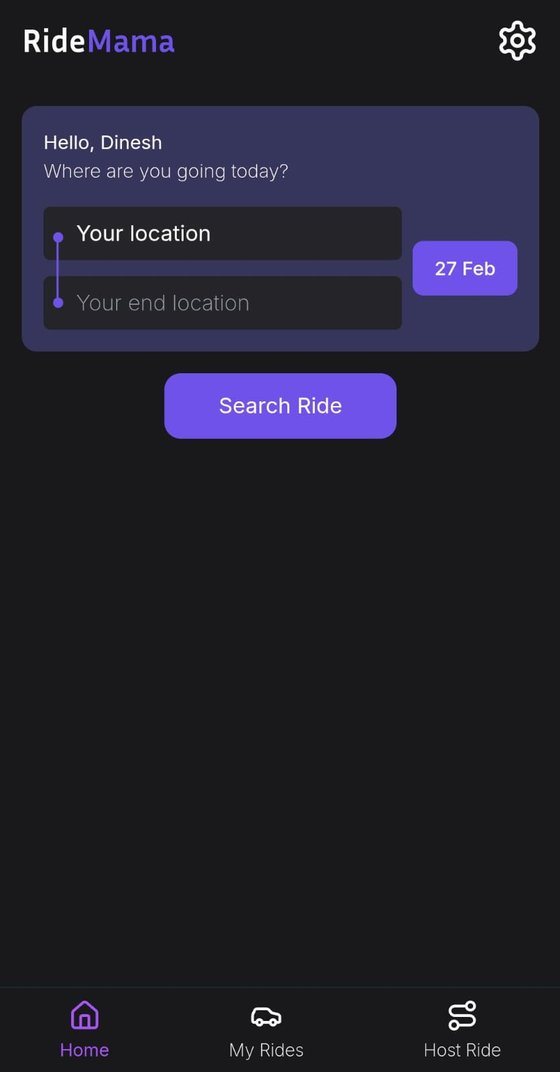
Work that shows how we do it.
Real projects where mvp development did the heavy lifting, from the brief to launch.
Already past the first version?
If the question has been answered and the next step is scale, one of these is a better place to start.
- SaaS Product DevelopmentThe product works and you're selling it to many customers, with plans and billing.
- Custom Software DevelopmentIt's an internal system or platform built around how one business runs.
- UI/UX Product DesignYou need the experience designed and tested before anyone builds it.
- Mobile App DevelopmentYour users live on their phones and the app is the product.
- Ongoing Product EngineeringThe MVP is live and you need a team to keep shipping.
- AI SolutionsThe core of the idea is an AI feature that has to prove it works.
Questions

The things people
ask us first.
If yours isn’t here, send it over. We reply within 1 hour, guaranteed, and you’ll get a straight answer rather than a brochure.
What exactly is an MVP?
+
A minimum viable product is the smallest thing you can put in front of real users that settles a real question about your business. It isn't a cheap version of the full product, and it isn't a prototype. It's a test with a result you can act on.
How do you decide what goes in and what gets cut?
+
We start from the assumption you're testing, then ask of every feature: if this were missing, would the test still give a trustworthy answer? Whatever survives goes in. Everything else becomes the roadmap, so nothing is lost, only sequenced.
Will we have to rebuild it later?
+
That depends on which kind of build you need, and we'll tell you plainly which one we think it is. A validation build is meant to be disposable. A foundation build is designed so version two extends it. The expensive mistake is confusing the two.
How much does an MVP cost?
+
It depends on the scope that survives the cut: how many kinds of user, how many workflows, and whether payments or integrations are part of the test. We scope it with you and send a fixed, itemised quote before any work starts.
Can you work with a technical founder or an in-house team?
+
Yes, and it's often the best setup. We can take the parts your team doesn't have time for, work alongside your engineers in the same repository, or hand over completely once the first version is live.
What if the MVP shows the idea doesn't work?
+
Then it did its job, and it did it before you spent a year finding out. In practice the answer is usually 'not quite', and the data points at what to change.
Do you sign an NDA?
+
Happily, before you share anything sensitive. Your idea, your data and your code are yours, and that's in writing.


Where ambitious
ideas become reality.
We design, develop, and support digital experiences that turn ambitious ideas into meaningful products.